Business Infographic White 3D Paper Templates: A Complete Guide to Visual Communication
In an age where information flows faster than ever, capturing and holding an audience's attention has become one of the most valuable skills in business, education, and creative communication. Infographics have emerged as a powerful solution—blending data, design, and storytelling into a single visual format that people can absorb at a glance. Among the many styles available, the Business Infographic White 3D Paper design stands out for its clean, modern aesthetic and remarkable versatility. Whether you are presenting quarterly results, explaining a new process, or teaching a complex concept, this style offers a professional yet approachable canvas. In this article, we will explore everything you need to know about using a white 3D paper infographic template with a square layout, icons, and three clear options or steps—covering its purpose, significance, practical applications, and how to make the most of the downloadable AI, EPS, and JPEG files.
What Is a Business Infographic White 3D Paper Template?
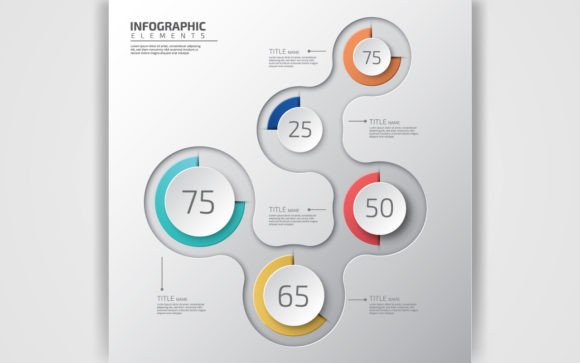
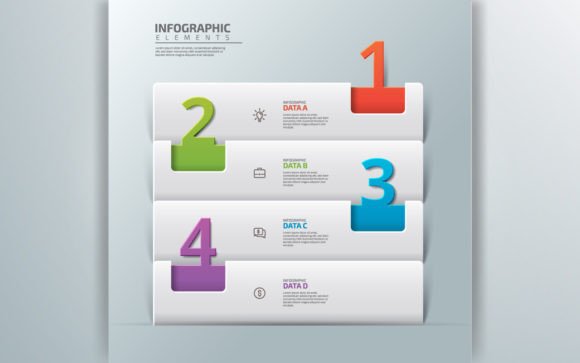
At its core, a business infographic white 3D paper template is a pre-designed visual layout that simulates a piece of paper folded or layered in three dimensions. The "white 3D paper" effect gives the design a tangible, almost handcrafted feel—like a physical document that has been carefully positioned to catch the light. This style often includes subtle shadows, crisp edges, and a clean white background that makes icons, text, and data stand out clearly. The square template design organizes content into a balanced, grid-like structure, typically featuring three main sections, steps, or options—each accompanied by its own icon and supporting text.
The template is created using professional vector graphics software, specifically Adobe Illustrator, and is delivered in three widely compatible formats: AI (native Illustrator file), EPS (encapsulated postscript for cross-platform editing), and high-resolution JPEG (for immediate use in presentations or web content). This combination ensures that designers, marketers, educators, and business professionals can open, customize, and deploy the infographic without friction, regardless of their software ecosystem.
Key takeaway: A white 3D paper infographic template combines the clarity of a clean white background with the visual depth of three-dimensional paper layers, creating a professional and engaging way to present three key ideas, steps, or options.
Why Choose a White 3D Paper Design for Your Infographic?
The visual style of an infographic is just as important as the information it contains. A white 3D paper design offers several distinct advantages that make it a favorite among communicators:
1. Clean and Professional Aesthetic
White space is a cornerstone of effective design. It reduces cognitive load, improves readability, and conveys a sense of clarity and professionalism. The white 3D paper effect takes this a step further by adding a subtle tactile quality—viewers feel as though they are looking at a physical object, which can enhance trust and engagement. In business contexts, this style projects competence and attention to detail, making it ideal for client-facing materials, boardroom presentations, and published reports.
2. Focus on Content Through Icons and Structure
The square template design with icons serves a dual purpose: it organizes information into digestible chunks and provides visual anchors that help viewers quickly locate key points. Icons are universally understood and can convey complex ideas in a split second—think of a lightbulb for "idea," a gear for "process," or a chart for "growth." When paired with the 3D paper layout, these icons appear to sit on or emerge from the paper surface, creating a sense of depth that draws the eye naturally from one section to the next.
3. Perfect for Three-Step or Three-Option Processes
Human memory works well with groups of three. Whether it's "past, present, future," "beginning, middle, end," or "problem, solution, result," the number three feels complete and balanced. The three-step or three-option layout of this template is therefore naturally satisfying. It allows you to present a process, compare alternatives, or guide the audience through a logical progression without overwhelming them. For example, you might use it to outline a three-phase marketing strategy, three customer segments, or three product benefits.
Practical Applications of the 3-Step Square Infographic
The versatility of the white 3D paper infographic with square template design means it can be adapted to a wide range of fields. Here are some of the most effective use cases:
Business Presentations and Reports
In boardrooms and client meetings, every second counts. A well-designed infographic can replace several slides of bullet points. Use the three-step layout to highlight a company's three core values, three growth drivers, or three key milestones for the upcoming quarter. The clean white design ensures that your data—not the decoration—remains the focus, while the 3D paper effect adds a subtle premium feel that reflects well on your brand.
Educational Materials and E-Learning
Teachers and trainers often need to break down concepts into manageable steps. The three-option format works wonderfully for explaining a scientific process (e.g., "hypothesis, experiment, conclusion"), a historical timeline, or a decision-making framework. By providing the template in AI and EPS formats, educators can easily customize icons, colors, and text to match their curriculum, while the high-resolution JPEG serves as a ready-to-use visual aid for handouts or slides.
Marketing Content and Social Media
Digital marketers are always looking for visual assets that stop the scroll. A square infographic is inherently social-media-friendly—fitting perfectly into Instagram, LinkedIn, and Facebook feeds. The 3D paper style gives content a unique texture that stands out among flat images. Use it to compare three product features, outline a three-step guide for your customers, or present three statistics that support your value proposition. Because the template comes in vector formats, resizing for different platforms is seamless and always retains crisp quality.
Process Documentation and Onboarding
New employees often face a flood of information. A simple three-step infographic can serve as a quick-reference guide for onboarding—covering, for example, "Day 1: Orientation," "Week 1: Training," and "Month 1: First Project." The visual layout reduces anxiety and helps newcomers remember the sequence of events. The included AI and EPS files allow HR teams to modify the template and maintain a consistent visual standard across all internal documentation.
Understanding the Included File Formats: AI, EPS, and JPEG
One of the most practical features of this product is the range of file formats provided. Each format serves a different purpose, and understanding the differences will help you use the template more effectively.
- AI File (Adobe Illustrator): This is the native source file created with Adobe Illustrator. It preserves all layers, editable text, vector paths, and effects—including the 3D paper simulation. If you have access to Illustrator, this is your best option for deep customization: changing colors, swapping icons, adjusting shadows, or adding new elements. The AI file is fully scalable to any size without losing quality.
- EPS File (Encapsulated PostScript): EPS is a vector format that can be opened in a wide variety of design programs, including Adobe Illustrator, CorelDRAW, and Affinity Designer. Like the AI file, it retains vector quality and allows editing. This format is particularly useful if you are collaborating with someone who uses different software, or if you want a backup that is not tied to a single application.
- JPEG File (High Resolution): The JPEG is a raster image at high resolution (typically 300 DPI), ready for immediate use. You can insert it into a Word document, upload it to a website, or include it in an email newsletter without any additional editing. While JPEGs do not support transparencies or layering, they offer the ultimate convenience for quick deployment.
Having all three formats in one download means you can start using the infographic immediately in a presentation (JPEG), customize it later in your preferred vector software (AI or EPS), and share it with colleagues who may have different tools. This flexibility is especially valuable in fast-paced environments where time is limited.
Pro tip: Always keep the AI or EPS file as your "master" copy. Make edits there, then export new JPEGs or PDFs as needed. This way, you never lose the ability to tweak the design later.
How to Customize Your White 3D Paper Infographic
Even the best template benefits from thoughtful customization. Here is a step-by-step guide to making the template your own while preserving its professional quality:
- Open the AI or EPS file in Adobe Illustrator (or compatible software). You will see layers for the background, paper fold effects, icons, and text blocks. Keep the layer structure intact to avoid accidentally moving elements.
- Edit the text to reflect your specific content. The three sections or steps are already labeled, so simply replace the placeholder copy with your own headings, subheadings, and supporting points. Keep descriptions concise—infographics work best when text is minimal.
- Choose colors that align with your brand. The white 3D paper design already provides a neutral base, but you can change the accent colors of icons, lines, or shadow tints. Stick to two or three complementary colors to maintain visual harmony.
- Swap or refine icons as needed. The template includes icons that are representative of common business concepts, but you can replace them with your own vector icons. Ensure the style (line weight, filled vs. outline, flat vs. dimensional) matches the original for a cohesive look.
- Adjust the 3D paper effect if desired. The white paper layers typically use subtle gradients and drop shadows. You can modify the angle or intensity of these effects, but be careful not to overdo it—the goal is a natural, tactile appearance, not a cartoonish pop-out.
- Export your final version in the required format. For print, use high-resolution JPEG, PDF, or EPS. For web, you may export a lighter JPEG or PNG. The vector formats will also allow you to create responsive SVG files for websites.
Common Misunderstandings About Infographic Templates
Despite their popularity, there are a few misconceptions about using pre-designed infographic templates like this one. Let's address them directly:
Myth 1: "Using a template means the design is not original." In reality, templates are starting points—not final products. By customizing colors, icons, text, and layout details, you create a unique asset that reflects your brand. Professional designers often use templates to save time on repetitive tasks, freeing up energy for creative problem-solving.
Myth 2: "3D effects look dated or gimmicky." This depends entirely on execution. The white 3D paper style is subtle and texture-based, not flashy or exaggerated. It mimics real-world materials, which can actually increase a sense of authenticity. When used appropriately, it adds depth without distracting from the message.
Myth 3: "Infographics are only for data-heavy content." While infographics excel at presenting statistics, they are equally effective for concept explanations, step-by-step guides, comparisons, and storytelling. The three-option template is especially useful for simplifying qualitative information, such as customer personas or team roles.
Why This Template Meets Modern Visual Communication Needs
Today's audiences are bombarded with information from multiple channels. To break through the noise, your visuals must be clear, credible, and easy to process. The Business Infographic White 3D Paper template addresses all three requirements:
- Clarity: The white background and square grid reduce visual clutter. Each of the three sections is distinct, with its own icon and space for text. The viewer's eye naturally follows a left-to-right or top-to-bottom flow, depending on your layout.
- Credibility: A polished, professional design signals that you have invested time and care into your communication. The 3D paper effect adds a subtle physicality that feels trustworthy—like a printed document rather than a hastily made digital graphic.
- Ease of processing: By grouping information into three steps or options, you help your audience grasp the structure quickly. Icons provide instant visual cues, and the square format is familiar and balanced, reducing the mental effort required to interpret the content.
Furthermore, the availability of vector formats (AI and EPS) means you can adapt the template for different contexts: a large-format poster, a small social media square, an email header, or a slide in a deck. The high-resolution JPEG serves as a reliable fallback for quick use. This level of flexibility is essential in a world where content is repurposed across multiple platforms.
Practical Tips for Getting the Most Out of Your Download
Here are a few actionable suggestions to help you maximize the value of your white 3D paper infographic template:
- Use the AI file as your master template. Make all major edits in Illustrator, then export derivative files (JPEG, PNG, PDF) as needed. This ensures you never lose the ability to adjust the design later.
- Test your icons with real users. If you change the original icons, check that the new ones are instantly recognizable. A simple map pin for "location" or a clock for "time" works well. Avoid abstract symbols that require explanation.
- Keep text to 10–15 words per section. The power of an infographic lies in its visual impact. Use the text area for a short heading and a brief supporting phrase, not paragraphs. Let the icons and layout do the heavy lifting.
- Match the paper effect to your brand tone. A clean white paper look is neutral, but you can adjust the shadow opacity or add a very subtle off-white tint to warm the design. Keep it minimal—maintain the "white paper" illusion.
- Use the JPEG for internal drafts or quick sharing. When collaborating with team members who do not have design software, the JPEG is your friend. It can be inserted into documents, marked up, and shared instantly.
"A great infographic does not just present information; it guides the viewer to an understanding. The white 3D paper style, with its clean layers and clear structure, does exactly that—without getting in the way." — Visual communication best practice
Conclusion: Elevate Your Communication with a Versatile, Professional Tool
In a world where visual content is no longer optional but essential, having a reliable, adaptable infographic template in your toolkit can make a significant difference in how your message is received. The Business Infographic White 3D Paper template, with its square layout, icon-supported three-step structure, and downloadable AI, EPS, and JPEG files, offers a practical and professional solution for a wide range of communication needs—from corporate presentations to educational materials, marketing assets to internal documentation.
Its clean white aesthetic and subtle three-dimensional texture provide visual interest without compromising clarity, while the three-option format aligns with how audiences naturally process information. Whether you are a seasoned designer looking for a time-saving base or a business professional seeking a polished visual for your next important meeting, this template delivers both quality and convenience. By understanding the file formats and following a few customization best practices, you can create infographics that are not only informative and attractive but also deeply aligned with your unique message and brand identity.
So, take advantage of the included AI, EPS, and high-resolution JPEG files, and start transforming your ideas into clear, compelling visual stories. Hope you like it, and thanks for embracing the power of thoughtful design.
— End of Article —